

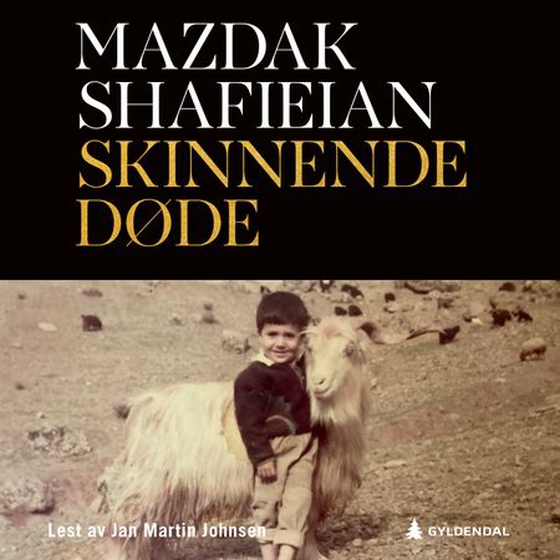
Skinnende døde lydbok
It’s the year 1366 according to the Iranian solar calendar, and 1987 according to the Gregorian, and I am seven years old, as old as the war against Iraq, on the run in a little village with no electricity near Khorramabad.Shining Dead is based on the author’s own experiences from the eight-year Iran-Iraq war as well as the changes that occurred in Iranian society in the years after the 1979 Isla…
Andre har også kjøpt
It’s the year 1366 according to the Iranian solar calendar, and 1987 according to the Gregorian, and I am seven years old, as old as the war against Iraq, on the run in a little village with no electricity near Khorramabad.
Shining Dead is based on the author’s own experiences from the eight-year Iran-Iraq war as well as the changes that occurred in Iranian society in the years after the 1979 Islamic Revolution. In perceptive and pictorial language, Shafieian describes a dramatic childhood in which war against Iran’s neighbour is superseded by war against the Iranian people’s own rulers: there are vivid, intricate descriptions of the atmosphere in the cities in the wake of chemical bombardment, alongside accounts of events in left-wing radical circles, with arrests and executions of intellectuals and dissidents as they were experienced by a child. Shining Dead is a novel about memory, about belonging, the home of one’s childhood, and deep love for family and friends.
Praise
«’Time heals no wounds’, writes Mazdak Shafieian, ‘it multiplies them’. Time and its workings on life and memory is the pivotal point around which Shafieian’s novel turns: Who is that little boy who grew up in Iran during the Iran-Iraq war? What did he experience, how does it impact him – and how does one find a literary form for the experiences of war? In an unusually beautiful, perceptive prose, Shafieian turns to remembrance with the method of an archeologist; what he digs out, is a novel of outstanding quality. Skinnende døde follows a boy through days as marked by childish boredom as with sudden bomb attacks. The text is equally perceptive of all detail, and as such it paints a world that is horrible and prosaic by turns.”
Statement from the jury of the Critics’ Prize 2022
