

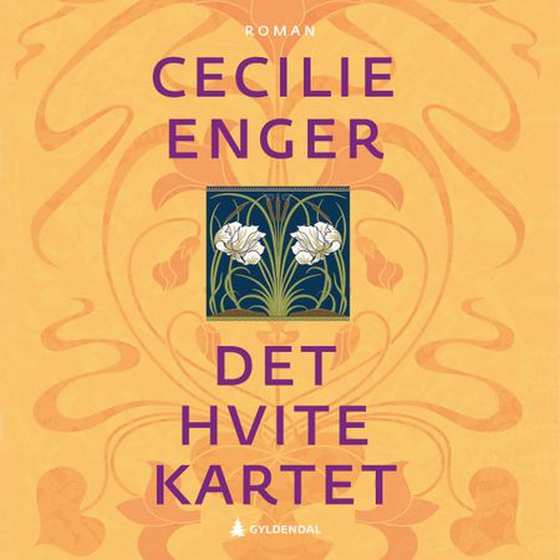
Det hvite kartet lydbok
They set out as pioneers of their time in the late 1800s, but kept their private lives hidden. Bertha Torgersen and Hanna Brummenæs are unknown figures to most people, but the story of the two shop girls who met in Karmøy’s hard, masculine mining community, and – wearing men’s hats and coats – forced their way into male-dominated positions, is both astonishing and moving.These two transgressive ‘…
Flere bøker av samme forfatter
Mors gaver
Cecilie Enger Lydbok
Himmelstormeren
Cecilie Enger Lydbok
Kammerpiken
Cecilie Enger Lydbok
Pust for meg
Cecilie Enger Lydbok
Se i nåde
Cecilie Enger Lydbok
Brødrene Henriksen
Cecilie Enger Lydbok
Hjemmekontoret
Selma Lønning Aarø Lydbok
Ett minutts stillhet
Cecilie Enger Lydbok



They set out as pioneers of their time in the late 1800s, but kept their private lives hidden. Bertha Torgersen and Hanna Brummenæs are unknown figures to most people, but the story of the two shop girls who met in Karmøy’s hard, masculine mining community, and – wearing men’s hats and coats – forced their way into male-dominated positions, is both astonishing and moving.
These two transgressive ‘male-women’ kept their love a secret from the world around them and embarked on an extraordinary journey up through the social ranks, but also experienced misery in the wake of their life choices.
Foreign sales:
Germany, Random House
Poland, Smak S?owa
Hungary, Typotex
REVIEWS:
“Cecilie Enger has an eye for detail. For smells and atmosphere, for fashions and worn-out shoes, and for the political tensions of the time, where the issue of women and their right to vote was the focus of attention. This biographical novel flows seamlessly, with fine transitions. There is depth and definition to Enger’s narrative. She doesn’t indulge in artful literary gestures, rather presenting two extraordinary, gifted women through assured dialogue, suggestion, and dramatic description. [...] Cecilie Enger’s tale is a finely honed example of the art of the novel.”
-Dagsavisen
“An intimate and down-to-earth portrait of two Norwegian pioneers in sexuality, commerce, and gender equality. [...] Enger conjures up the soul of Bertha Torgersen’s main character.”
-Dagens Næringsliv
“The White Map is a novel about daring to choose one’s own path. It’s the tale of two women who went to great lengths to add more colour to that map.”
-NRK
“Enger is a fine, natural writer. It is commendable to highlight the story of the world’s first female shipowners – a story also about Norway, women’s history and lesbian love. That in itself makes it worth reading.”
-Adresseavisen
“The book is interesting in its descriptions of two pioneers who defy prejudices, conventions and barriers in petty-bourgeois and puritanical Haugesund at the turn of the last century.”
-Dagbladet
“Such novels help to improve our understanding of women as historical actors, not passive passengers, and of the fact that there have always been different ways of living as a woman, even before our own age.”
-Vårt Land
“The first part of the novel offers a beautiful and spine-tingling image of how the two of them may have approached one other.”
-Aftenposten
“Cecilie Enger has written a credible portrait, a readable story in which much has been invented due to limited historical sources. Historical novels are no literary innovation, but they still have the right to exist. And Cecilie Enger once again shows that in the genre she is one of Norway’s best.”
-Fri Fagbevegelse
“Enger deserves full respect for her work in bringing the life of yet another forgotten woman into the light”
-Klassekampen
