

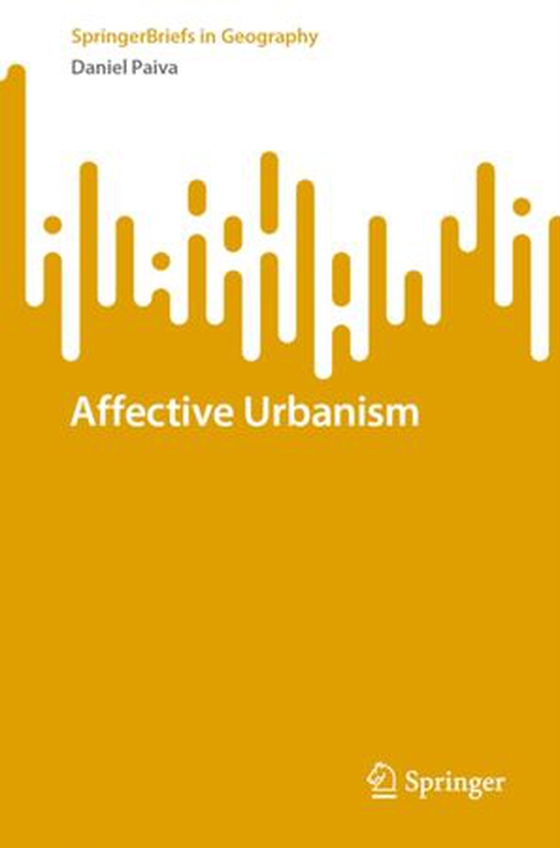
Daniel Paiva
(forfatter)
Affective Urbanism (SpringerBriefs in geography) ebok
563,-
The book poses key questions on the contemporary practices of experience-oriented urbanism from the perspective of the affective turn. Departing from a critique of the imposition of the experience economy on contemporary urbanism, the book seeks alternative narratives and praxis for the co-creation of experiences in the city by looking at how different urban curators play with rhythms, atmosphere…
The book poses key questions on the contemporary practices of experience-oriented urbanism from the perspective of the affective turn. Departing from a critique of the imposition of the experience economy on contemporary urbanism, the book seeks alternative narratives and praxis for the co-creation of experiences in the city by looking at how different urban curators play with rhythms, atmospheres, and worlds to improve their communities. In this sense, the book offers practical pathways for urbanists interested in using experience co-creation as a tool for fostering communities and fulfilling the right to the city.
The book is mainly targeted to researchers, postgraduate students, and practitioners. The topic of affective urbanism is of interest to scholars in urban studies, architecture, geography, anthropology, and sociology.
Ebok
563,-





Forlag
Springer
Utgitt
08.06.2026
Sjanger
Dokumentar og fakta, Politikk og samfunn
Språk
English
Format
epub
DRM-beskyttelse
LCP
ISBN
9783031645075
The book poses key questions on the contemporary practices of experience-oriented urbanism from the perspective of the affective turn. Departing from a critique of the imposition of the experience economy on contemporary urbanism, the book seeks alternative narratives and praxis for the co-creation of experiences in the city by looking at how different urban curators play with rhythms, atmospheres, and worlds to improve their communities. In this sense, the book offers practical pathways for urbanists interested in using experience co-creation as a tool for fostering communities and fulfilling the right to the city.
The book is mainly targeted to researchers, postgraduate students, and practitioners. The topic of affective urbanism is of interest to scholars in urban studies, architecture, geography, anthropology, and sociology.
Ingen vurderinger ennå
