

Umut Ozsu
(forfatter)
Completing Humanity ebok
422,-
After the Second World War, the dissolution of European empires and emergence of ''new states'' in Asia, Africa, Oceania, and elsewhere necessitated large-scale structural changes in international legal order. In Completing Humanity, Umut Özsu recounts the history of the struggle to transform international law during the twentieth century''s last major wave of decolonization. Commencing in 1960, …
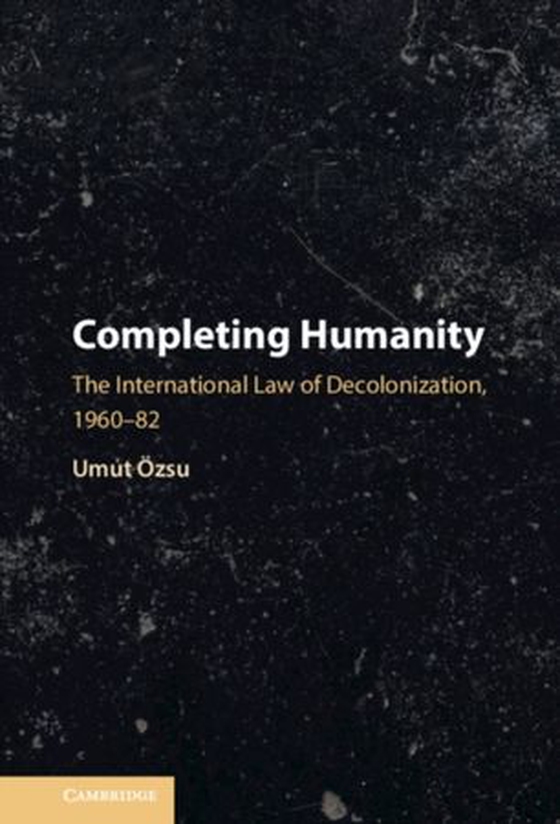
After the Second World War, the dissolution of European empires and emergence of ''new states'' in Asia, Africa, Oceania, and elsewhere necessitated large-scale structural changes in international legal order. In Completing Humanity, Umut Özsu recounts the history of the struggle to transform international law during the twentieth century''s last major wave of decolonization. Commencing in 1960, with the General Assembly''s landmark decolonization resolution, and concluding in 1982, with the close of the third UN Conference on the Law of the Sea and the onset of the Latin American debt crisis, the book examines the work of elite international lawyers from newly independent states alongside that of international law specialists from ''First World'' and socialist states. A study in modifications to legal theory and doctrine over time, it documents and reassesses post-1945 decolonization from the standpoint of the ''Third World'' and the jurists who elaborated and defended its interests.
Ebok
422,-





Undertittel
The International Law of Decolonization, 1960–82
Forlag
Cambridge University Press
Utgitt
02.11.2026
Sjanger
Dokumentar og fakta, Politikk og samfunn
Språk
English
Format
epub
DRM-beskyttelse
LCP
ISBN
9781108649001
After the Second World War, the dissolution of European empires and emergence of ''new states'' in Asia, Africa, Oceania, and elsewhere necessitated large-scale structural changes in international legal order. In Completing Humanity, Umut Özsu recounts the history of the struggle to transform international law during the twentieth century''s last major wave of decolonization. Commencing in 1960, with the General Assembly''s landmark decolonization resolution, and concluding in 1982, with the close of the third UN Conference on the Law of the Sea and the onset of the Latin American debt crisis, the book examines the work of elite international lawyers from newly independent states alongside that of international law specialists from ''First World'' and socialist states. A study in modifications to legal theory and doctrine over time, it documents and reassesses post-1945 decolonization from the standpoint of the ''Third World'' and the jurists who elaborated and defended its interests.
Ingen vurderinger ennå
