

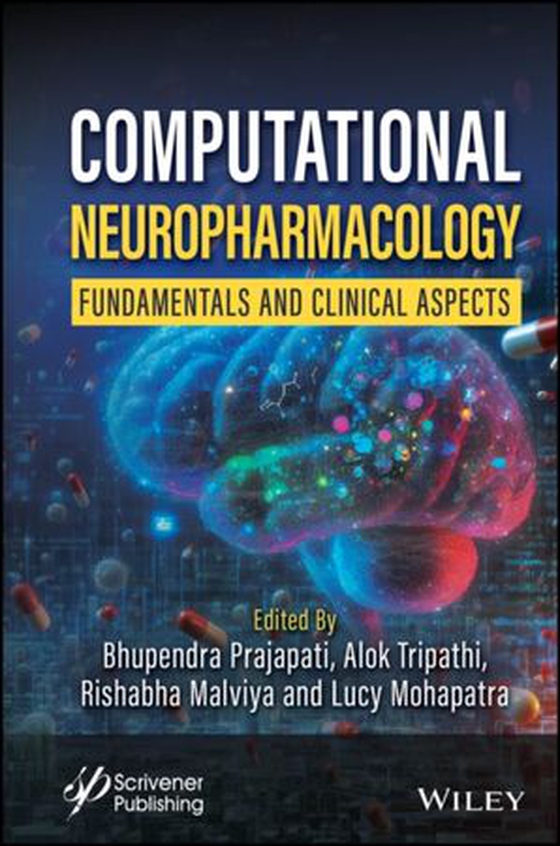
Computational Neuropharmacology ebok
2518,-
The book gives comprehensive insights into the cutting-edge intersection of computational methods and neuropharmacology, making it an essential resource for understanding and advancing medication for neurological and psychiatric disorders.
Computational Neuropharmacology is an in-depth exploration of the convergence of computational methods with neuropharmacology, a science concerned with unders…
The book gives comprehensive insights into the cutting-edge intersection of computational methods and neuropharmacology, making it an essential resource for understanding and advancing medication for neurological and psychiatric disorders.
Computational Neuropharmacology is an in-depth exploration of the convergence of computational methods with neuropharmacology, a science concerned with understanding pharmacological effects on the nervous system. This volume explores the most recent breakthroughs and potential advances in computational neuropharmacology, providing an extensive overview of the computational tools that are transforming medication discovery and development for neurological and psychiatric illnesses. Fundamental principles of computational neuropharmacology, descriptions of molecular-level interactions and their consequences for modern neuropharmacology, and an introduction to theoretical neuroscience are highlighted throughout this resource. Additionally, this study addresses computational attitudes in counseling psychology to improve therapeutic procedures through data-driven insights. Computational psychiatry uses computational technologies to bridge the gap between the molecular basis and clinical symptoms of psychiatric diseases.
This volume covers computational approaches to drug discovery in neurohumoral transmission and signal transduction, Parkinson’s disease, epilepsy, and Alzheimer’s disease, and the use of molecular docking and machine learning in drug development for neurological disorders. It also discusses the use of computational methods to uncover potential treatments for autism spectrum disorder, depression, and anxiety.
Audience
This book is a valuable resource for computer scientists, engineers, researchers, clinicians, and students, providing a detailed understanding of the computational tools that are changing the developing field of neuropharmacology, leading the future of medication discovery and development for neurological and psychiatric illnesses by combining modern computational approaches with neuropharmacological research.
Ebok
2518,-





Undertittel
Fundamentals and Clinical Aspects
Forlag
Wiley-Scrivener
Utgitt
10.06.2026
Sjanger
Dokumentar og fakta
Språk
English
Format
epub
DRM-beskyttelse
LCP
ISBN
9781394242450
The book gives comprehensive insights into the cutting-edge intersection of computational methods and neuropharmacology, making it an essential resource for understanding and advancing medication for neurological and psychiatric disorders.
Computational Neuropharmacology is an in-depth exploration of the convergence of computational methods with neuropharmacology, a science concerned with understanding pharmacological effects on the nervous system. This volume explores the most recent breakthroughs and potential advances in computational neuropharmacology, providing an extensive overview of the computational tools that are transforming medication discovery and development for neurological and psychiatric illnesses. Fundamental principles of computational neuropharmacology, descriptions of molecular-level interactions and their consequences for modern neuropharmacology, and an introduction to theoretical neuroscience are highlighted throughout this resource. Additionally, this study addresses computational attitudes in counseling psychology to improve therapeutic procedures through data-driven insights. Computational psychiatry uses computational technologies to bridge the gap between the molecular basis and clinical symptoms of psychiatric diseases.
This volume covers computational approaches to drug discovery in neurohumoral transmission and signal transduction, Parkinson’s disease, epilepsy, and Alzheimer’s disease, and the use of molecular docking and machine learning in drug development for neurological disorders. It also discusses the use of computational methods to uncover potential treatments for autism spectrum disorder, depression, and anxiety.
Audience
This book is a valuable resource for computer scientists, engineers, researchers, clinicians, and students, providing a detailed understanding of the computational tools that are changing the developing field of neuropharmacology, leading the future of medication discovery and development for neurological and psychiatric illnesses by combining modern computational approaches with neuropharmacological research.
Ingen vurderinger ennå
