

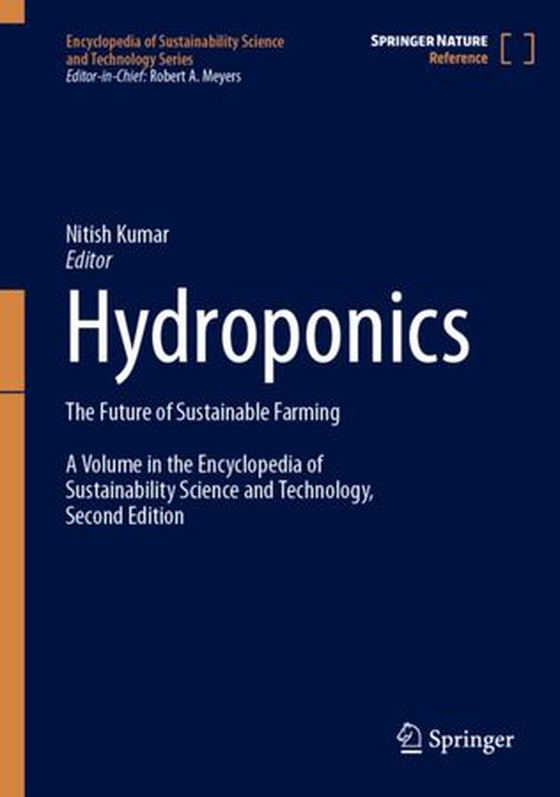
Nitish Kumar
(redaktør)
Hydroponics ebok
3939,-
This handbook covers both principal and applications aspects of hydroponics. This reference book shows the state-of-the-art in this area, while offering a clear view of supplying plants with nutrients other than soil. Chapters about hydroponics provides the reader with an understanding of the properties of the various soilless media and how these properties affect plant performance in relation to…
This handbook covers both principal and applications aspects of hydroponics. This reference book shows the state-of-the-art in this area, while offering a clear view of supplying plants with nutrients other than soil. Chapters about hydroponics provides the reader with an understanding of the properties of the various soilless media and how these properties affect plant performance in relation to basic agricultural operations, such as fertilization and irrigation. Chapters explore the drawbacks and advantages of using hydroponics as a soilless crop production system and provide a wider view of science, technology, and economic impact of hydroponics.
This book is a valuable resource to agriculturists, horticulturalists, greenhouse and nursery managers, and professionals involved with the production of plants. The handbook provides chapters about technology and applications of hydroponics. It contains an overview of the relevance of aquaponics in the fulfillment of the SDGs.
Ebok
3939,-





Undertittel
The Future of Sustainable Farming
Forlag
Springer
Utgitt
18.11.2026
Sjanger
Dokumentar og fakta, Natur og dyr, Politikk og samfunn
Språk
English
Format
epub
DRM-beskyttelse
LCP
ISBN
9781071639931
This handbook covers both principal and applications aspects of hydroponics. This reference book shows the state-of-the-art in this area, while offering a clear view of supplying plants with nutrients other than soil. Chapters about hydroponics provides the reader with an understanding of the properties of the various soilless media and how these properties affect plant performance in relation to basic agricultural operations, such as fertilization and irrigation. Chapters explore the drawbacks and advantages of using hydroponics as a soilless crop production system and provide a wider view of science, technology, and economic impact of hydroponics.
This book is a valuable resource to agriculturists, horticulturalists, greenhouse and nursery managers, and professionals involved with the production of plants. The handbook provides chapters about technology and applications of hydroponics. It contains an overview of the relevance of aquaponics in the fulfillment of the SDGs.
Ingen vurderinger ennå
