

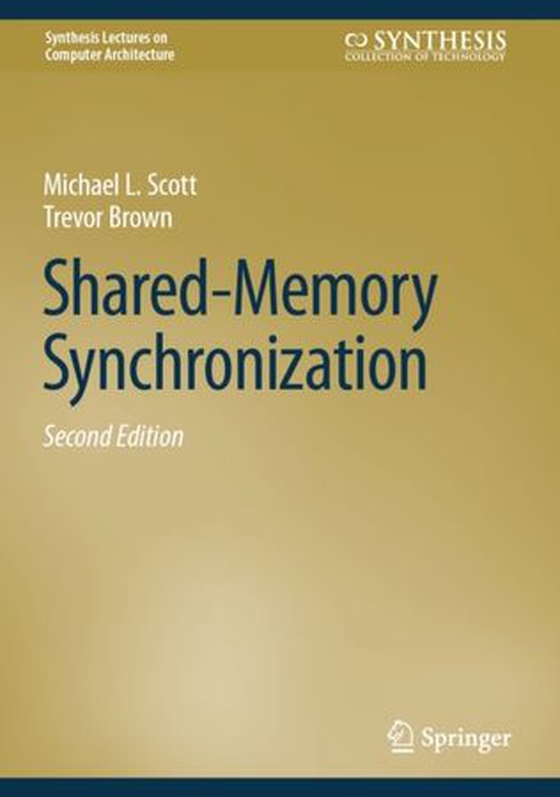
Michael Scott
(forfatter)
,
Trevor Brown
(forfatter)
Shared-Memory Synchronization ebok
563,-
This book offers a comprehensive survey of shared-memory synchronization, with an emphasis on “systems-level” issues. It includes sufficient coverage of architectural details to understand correctness and performance on modern multicore machines, and sufficient coverage of higher-level issues to understand how synchronization is embedded in modern programming languages.
The primary intended audi…
This book offers a comprehensive survey of shared-memory synchronization, with an emphasis on “systems-level” issues. It includes sufficient coverage of architectural details to understand correctness and performance on modern multicore machines, and sufficient coverage of higher-level issues to understand how synchronization is embedded in modern programming languages.
The primary intended audience for this book is “systems programmers”—the authors of operating systems, library packages, language run-time systems, concurrent data structures, and server and utility programs. Much of the discussion should also be of interest to application programmers who want to make good use of the synchronization mechanisms available to them, and to computer architects who want to understand the ramifications of their design decisions on systems-level code.
Ebok
563,-
Flere bøker av samme forfatter

Shakespeare: A Complete Introduction
Michael Scott Ebok
Shakespeare's Tragedies: All That Matters
Michael Scott Ebok
Shakespeare's Comedies: All That Matters
Michael Scott Ebok
X Marks the Spot
Michael Scott Ebok
Managing Public Sector Contracts
Matthew Potoski Ebok
Rural Versus Urban
Suzanne Mettler Ebok




Forlag
Springer
Utgitt
18.11.2026
Sjanger
Dokumentar og fakta
Språk
English
Format
epub
DRM-beskyttelse
LCP
ISBN
9783031386848
This book offers a comprehensive survey of shared-memory synchronization, with an emphasis on “systems-level” issues. It includes sufficient coverage of architectural details to understand correctness and performance on modern multicore machines, and sufficient coverage of higher-level issues to understand how synchronization is embedded in modern programming languages.
The primary intended audience for this book is “systems programmers”—the authors of operating systems, library packages, language run-time systems, concurrent data structures, and server and utility programs. Much of the discussion should also be of interest to application programmers who want to make good use of the synchronization mechanisms available to them, and to computer architects who want to understand the ramifications of their design decisions on systems-level code.
Ingen vurderinger ennå
