

David Leblang
(forfatter)
,
Benjamin Helms
(forfatter)
Ties That Bind ebok
352,-
Migration is among the central domestic and global political issues of today. Yet the causes and consequences - and the relationship between migration and global markets – are poorly understood. Migration is both costly and risky, so why do people decide to migrate? What are the political, social, economic, and environmental factors that cause people to leave their homes and seek a better life el…
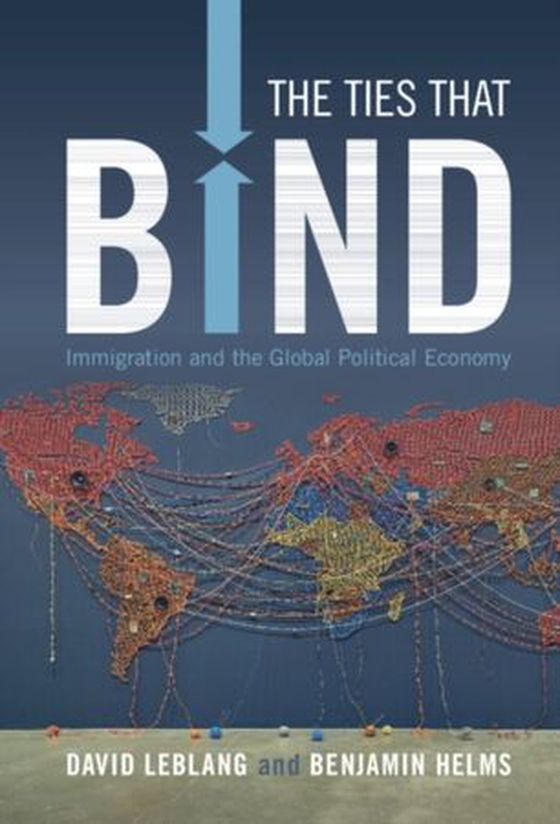
Migration is among the central domestic and global political issues of today. Yet the causes and consequences - and the relationship between migration and global markets – are poorly understood. Migration is both costly and risky, so why do people decide to migrate? What are the political, social, economic, and environmental factors that cause people to leave their homes and seek a better life elsewhere? Leblang and Helms argue that political factors - the ability to participate in the political life of a destination - are as important as economic and social factors. Most migrants don''t cut ties with their homeland but continue to be engaged, both economically and politically. Migrants continue to serve as a conduit for information, helping drive investment to their homelands. The authors combine theory with a wealth of micro and macro evidence to demonstrate that migration isn''t static, after all, but continuously fluid.
Ebok
352,-





Undertittel
Immigration and the Global Political Economy
Forlag
Cambridge University Press
Utgitt
02.11.2026
Sjanger
Dokumentar og fakta, Politikk og samfunn
Språk
English
Format
epub
DRM-beskyttelse
LCP
ISBN
9781009233255
Migration is among the central domestic and global political issues of today. Yet the causes and consequences - and the relationship between migration and global markets – are poorly understood. Migration is both costly and risky, so why do people decide to migrate? What are the political, social, economic, and environmental factors that cause people to leave their homes and seek a better life elsewhere? Leblang and Helms argue that political factors - the ability to participate in the political life of a destination - are as important as economic and social factors. Most migrants don''t cut ties with their homeland but continue to be engaged, both economically and politically. Migrants continue to serve as a conduit for information, helping drive investment to their homelands. The authors combine theory with a wealth of micro and macro evidence to demonstrate that migration isn''t static, after all, but continuously fluid.
Ingen vurderinger ennå
