

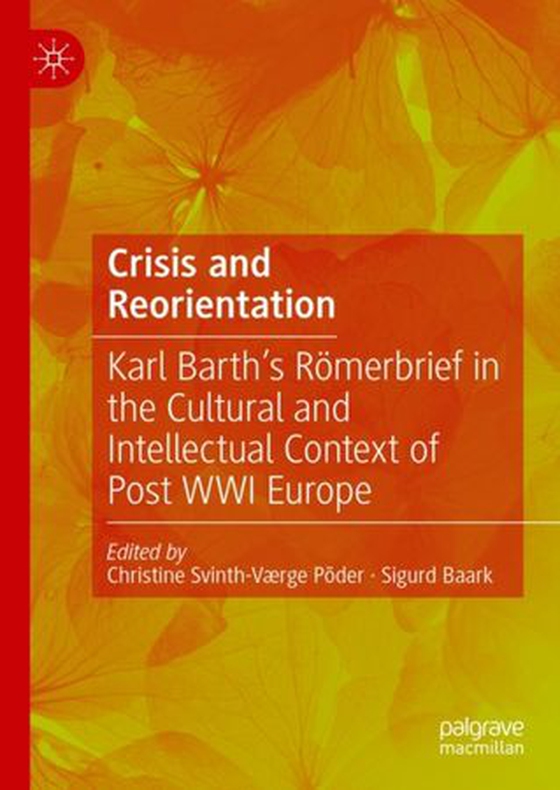
Christine Svinth-Vaerge Poder
(redaktør)
,
Sigurd Baark
(redaktør)
Crisis and Reorientation (Religion and Philosophy) ebok
1963,-
This book uses Karl Barth’s Der Römerbrief (1922) as a prism through which to explore the role of religion and its interactions with cultural and political thought in the turbulent interwar period in Europe. One of the most influential books in twentieth-century protestant theology, Der Römerbrief found Barth arguing that the crisis of the time was grounded in an even more profound crisis that pe…
This book uses Karl Barth’s Der Römerbrief (1922) as a prism through which to explore the role of religion and its interactions with cultural and political thought in the turbulent interwar period in Europe. One of the most influential books in twentieth-century protestant theology, Der Römerbrief found Barth arguing that the crisis of the time was grounded in an even more profound crisis that pertained to the human condition as such. While much research has been conducted on Der Römerbrief, most of it has focused on the book’s explicit theology. The aim of the present volume is to mark the centenary of this seminal book with a broader investigation into the movements of thought within Der Römerbrief and its reception and impact within its cultural and intellectual context. This broader approach by a range of Northern European researchers brings attention to interconnections between cultural and theological movements intimes of crisis.
Ebok
1963,-


Undertittel
Karl Barth’s Römerbrief in the Cultural and Intellectual Context of Post WWI Europe
Forlag
Palgrave Macmillan
Utgitt
18.11.2026
Sjanger
Religion og livssyn, Historie, Dokumentar og fakta, Politikk og samfunn
Serie
Religion and Philosophy
Språk
English
Format
epub
DRM-beskyttelse
LCP
ISBN
9783031276774
This book uses Karl Barth’s Der Römerbrief (1922) as a prism through which to explore the role of religion and its interactions with cultural and political thought in the turbulent interwar period in Europe. One of the most influential books in twentieth-century protestant theology, Der Römerbrief found Barth arguing that the crisis of the time was grounded in an even more profound crisis that pertained to the human condition as such. While much research has been conducted on Der Römerbrief, most of it has focused on the book’s explicit theology. The aim of the present volume is to mark the centenary of this seminal book with a broader investigation into the movements of thought within Der Römerbrief and its reception and impact within its cultural and intellectual context. This broader approach by a range of Northern European researchers brings attention to interconnections between cultural and theological movements intimes of crisis.
Ingen vurderinger ennå
