

Max Adams
(forfatter)
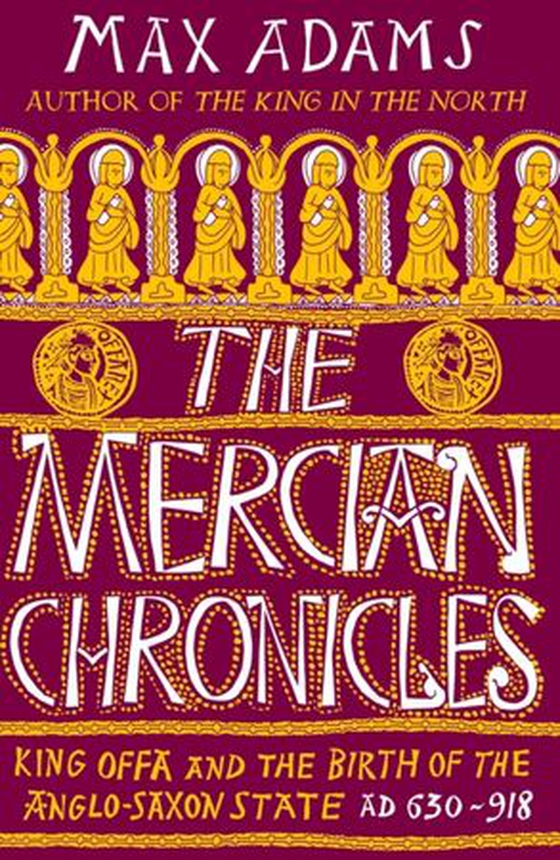
Mercian Chronicles ebok
124,-
A brilliant recreation of the golden age of the Anglo-Saxon kingdom of Mercia – its landscapes, peoples, conflicts, power structures and political geography.
The eighth century has long been a neglected backwater in English history: a shadowland between the death of Bede and the triumphs of Ælfred. But before the hegemony of Wessex, the kingdom of Mercia - spread across a broad swathe of central…
A brilliant recreation of the golden age of the Anglo-Saxon kingdom of Mercia – its landscapes, peoples, conflicts, power structures and political geography.
The eighth century has long been a neglected backwater in English history: a shadowland between the death of Bede and the triumphs of Ælfred. But before the hegemony of Wessex, the kingdom of Mercia - spread across a broad swathe of central England – was the dynamic heart of a kingship that discovered the means to exercise central political authority for the first time since the Roman empire. That authority was used to construct trading networks and markets; develop economic and cultural links with the Continent, and lay the foundations for a system of co-ordinated defence that Ælfred would reinvent at the end of the ninth century.
Two kings, Æthelbald (716–757) and Offa (757–796) dominate the political landscape of the rising power of Mercia. During their reigns, monasteries became powerhouses of royal patronage, economic enterprise and trade. Offa constructed his grandiose dyke along the borders of the warlike Welsh kingdoms and, more subtly, spread his message of political superiority through coinage bearing his image. But Æthelbald and Offa between them built something with an even more substantial legacy – a geography of medieval England. And they engineered a set of tensions between kingship, landholding and church that were to play out dramatically at the dawn of the Viking Age.
In this, the latest of his sequence of histories of Early Medieval Britain, Max Adams re-connects the worlds of Oswald, Bede and Ælfred in an absorbing study of the landscape, politics and society of a fascinating century.




Undertittel
King Offa and the Birth of the Anglo-Saxon State, AD 630–918
Forlag
Apollo
Utgitt
02.11.2026
Sjanger
Historie, Dokumentar og fakta
Språk
English
Format
epub
DRM-beskyttelse
LCP
ISBN
9781838933272
A brilliant recreation of the golden age of the Anglo-Saxon kingdom of Mercia – its landscapes, peoples, conflicts, power structures and political geography.
The eighth century has long been a neglected backwater in English history: a shadowland between the death of Bede and the triumphs of Ælfred. But before the hegemony of Wessex, the kingdom of Mercia - spread across a broad swathe of central England – was the dynamic heart of a kingship that discovered the means to exercise central political authority for the first time since the Roman empire. That authority was used to construct trading networks and markets; develop economic and cultural links with the Continent, and lay the foundations for a system of co-ordinated defence that Ælfred would reinvent at the end of the ninth century.
Two kings, Æthelbald (716–757) and Offa (757–796) dominate the political landscape of the rising power of Mercia. During their reigns, monasteries became powerhouses of royal patronage, economic enterprise and trade. Offa constructed his grandiose dyke along the borders of the warlike Welsh kingdoms and, more subtly, spread his message of political superiority through coinage bearing his image. But Æthelbald and Offa between them built something with an even more substantial legacy – a geography of medieval England. And they engineered a set of tensions between kingship, landholding and church that were to play out dramatically at the dawn of the Viking Age.
In this, the latest of his sequence of histories of Early Medieval Britain, Max Adams re-connects the worlds of Oswald, Bede and Ælfred in an absorbing study of the landscape, politics and society of a fascinating century.
Ingen vurderinger ennå
