

Simon Naylor
(forfatter)
Observatory Experiment (Science in History) ebok
1196,-
In this innovative history of the science of meteorology, Simon Naylor focuses our attention on the spaces in which it was pursued: meteorological observatories. During the nineteenth century, meteorologists established or converted sites where observers and their instruments could be housed, where they collected and analysed data and developed meteorological theories. He examines a number of the…
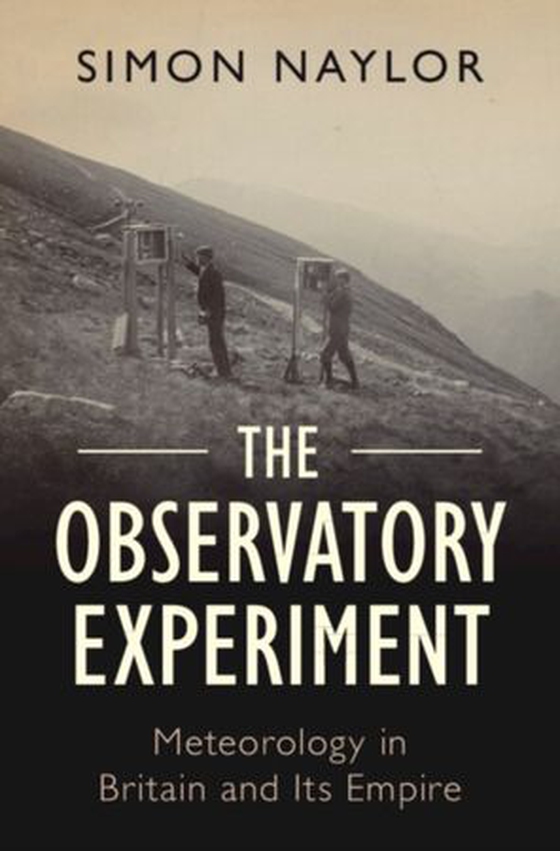
In this innovative history of the science of meteorology, Simon Naylor focuses our attention on the spaces in which it was pursued: meteorological observatories. During the nineteenth century, meteorologists established or converted sites where observers and their instruments could be housed, where they collected and analysed data and developed meteorological theories. He examines a number of these sites around the British Empire, along with the governmental, military and commercial networks connecting them. Taking many shapes to capture the weather in different environments, these observatories brought various social groups into contact with the practice of science, including sailors on naval surveying vessels, climbers ascending Scottish peaks, and families checking their rain gauges at home. Through a study of these spaces, Naylor argues for the treatment of meteorology as an experimental observatory science, on which the development of knowledge about local, regional, national and global weather and climate relied.
Ebok
1196,-





Undertittel
Meteorology in Britain and Its Empire
Forlag
Cambridge University Press
Utgitt
02.11.2026
Sjanger
Historie, Dokumentar og fakta, Natur og dyr
Serie
Science in History
Språk
English
Format
epub
DRM-beskyttelse
LCP
ISBN
9781009207249
In this innovative history of the science of meteorology, Simon Naylor focuses our attention on the spaces in which it was pursued: meteorological observatories. During the nineteenth century, meteorologists established or converted sites where observers and their instruments could be housed, where they collected and analysed data and developed meteorological theories. He examines a number of these sites around the British Empire, along with the governmental, military and commercial networks connecting them. Taking many shapes to capture the weather in different environments, these observatories brought various social groups into contact with the practice of science, including sailors on naval surveying vessels, climbers ascending Scottish peaks, and families checking their rain gauges at home. Through a study of these spaces, Naylor argues for the treatment of meteorology as an experimental observatory science, on which the development of knowledge about local, regional, national and global weather and climate relied.
Ingen vurderinger ennå
