

Elijah Doro
(forfatter)
Plunder for Profit (African Studies) ebok
422,-
Exploring over a century of Zimbabwe''s colonial and post-colonial history, Elijah Doro investigates the murky and noxious history of that powerful crop: tobacco. In a compelling narrative that debunks previous histories glorifying tobacco farming, Doro reveals the indelible marks that tobacco left on landscapes, communities, and people. Demonstrating that the history of tobacco farming is insepa…
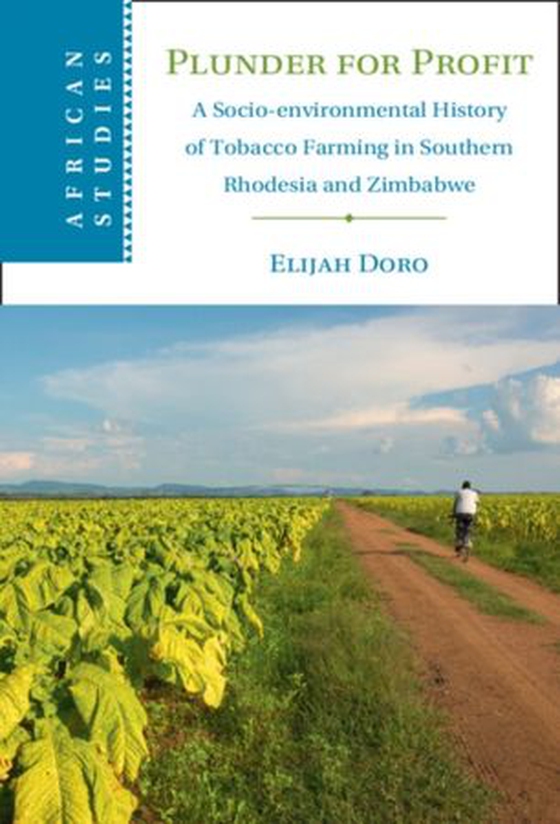
Exploring over a century of Zimbabwe''s colonial and post-colonial history, Elijah Doro investigates the murky and noxious history of that powerful crop: tobacco. In a compelling narrative that debunks previous histories glorifying tobacco farming, Doro reveals the indelible marks that tobacco left on landscapes, communities, and people. Demonstrating that the history of tobacco farming is inseparable from that of colonial encounter, Doro outlines how tobacco became an institutionalised culture of production, which was linked to state power and natural ecosystems, and driven by a pernicious heritage of unbridled plunder. With the destruction of landscapes, the negative impacts of the export trade and the growing tobacco epidemic in Zimbabwe, tobacco farming has a long and varied legacy in southern African and across the world. Connecting the local to the global, and the environmental to the social, this book illuminates our understandings of environmental history, colonialism and sustainability.
Ebok
422,-





Undertittel
A Socio-environmental History of Tobacco Farming in Southern Rhodesia and Zimbabwe
Forlag
Cambridge University Press
Utgitt
02.11.2026
Sjanger
Historie, Dokumentar og fakta, Politikk og samfunn
Serie
African Studies
Språk
English
Format
epub
DRM-beskyttelse
LCP
ISBN
9781009115360
Exploring over a century of Zimbabwe''s colonial and post-colonial history, Elijah Doro investigates the murky and noxious history of that powerful crop: tobacco. In a compelling narrative that debunks previous histories glorifying tobacco farming, Doro reveals the indelible marks that tobacco left on landscapes, communities, and people. Demonstrating that the history of tobacco farming is inseparable from that of colonial encounter, Doro outlines how tobacco became an institutionalised culture of production, which was linked to state power and natural ecosystems, and driven by a pernicious heritage of unbridled plunder. With the destruction of landscapes, the negative impacts of the export trade and the growing tobacco epidemic in Zimbabwe, tobacco farming has a long and varied legacy in southern African and across the world. Connecting the local to the global, and the environmental to the social, this book illuminates our understandings of environmental history, colonialism and sustainability.
Ingen vurderinger ennå
