

Prita Meier
(forfatter)
Surface of Things ebok
704,-
The first major history of photography from coastal East Africa
The ports of the Swahili coast—Zanzibar and Mombasa among them—have long been dynamic centers of trade where diverse peoples, ideas, and materials converge. With the arrival of photography in the mid-nineteenth century, these predominantly Muslim coastal communities cultivated and transformed the medium. The Surface of Things examin…
The first major history of photography from coastal East Africa
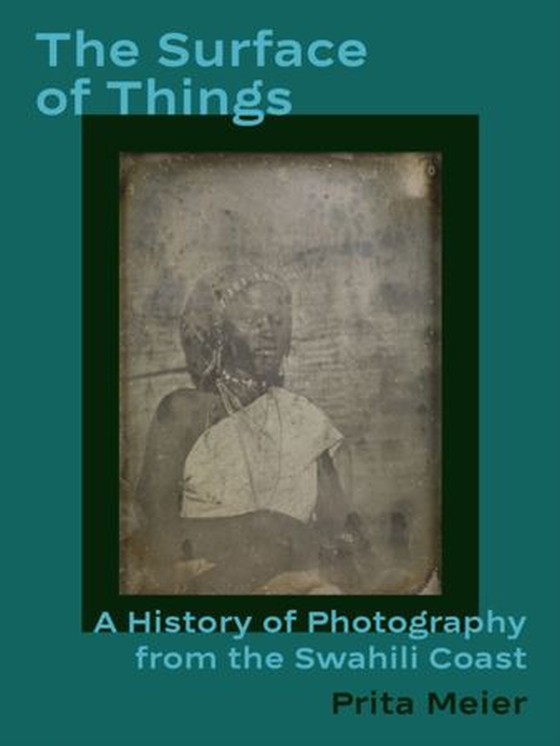
The ports of the Swahili coast—Zanzibar and Mombasa among them—have long been dynamic centers of trade where diverse peoples, ideas, and materials converge. With the arrival of photography in the mid-nineteenth century, these predominantly Muslim coastal communities cultivated and transformed the medium. The Surface of Things examines the complex maritime dynamics that shaped the photography of coastal Africa, exploring the pleasure and power of beautiful things and the ways people and their pictures transcended the boundaries of the colonial world.
Immersing readers in the globally interconnected networks of eastern Africa’s port cities, Prita Meier demonstrates how photographs are not static images but mobile objects with remarkable shape-shifting qualities. Beginning with the earliest photographs introduced through seaborne commerce, the medium’s integration into the cultural landscape was swift. Photographs functioned as objects of decoration, good taste, and cosmopolitanism, but were also used by local elites and foreigners to coerce and objectify enslaved people. Meier uncovers the oppressive agenda behind postcards and other popular images while describing African strategies of subversion and rebellion, revealing the performative authority that individuals exerted over their photographic likenesses.
Featuring more than two hundred images published here for the first time, The Surface of Things repositions the continent’s islands and archipelagos at the center of global photographic histories and shows how the people of the African Indian Ocean world experienced photography as a force of both oppression and freedom.
Ebok
704,-





Undertittel
A History of Photography from the Swahili Coast
Forlag
Princeton University Press
Utgitt
18.11.2026
Sjanger
Historie, Kunst og kultur, Dokumentar og fakta, Politikk og samfunn
Språk
English
Format
epub
DRM-beskyttelse
LCP
ISBN
9780691260969
The first major history of photography from coastal East Africa
The ports of the Swahili coast—Zanzibar and Mombasa among them—have long been dynamic centers of trade where diverse peoples, ideas, and materials converge. With the arrival of photography in the mid-nineteenth century, these predominantly Muslim coastal communities cultivated and transformed the medium. The Surface of Things examines the complex maritime dynamics that shaped the photography of coastal Africa, exploring the pleasure and power of beautiful things and the ways people and their pictures transcended the boundaries of the colonial world.
Immersing readers in the globally interconnected networks of eastern Africa’s port cities, Prita Meier demonstrates how photographs are not static images but mobile objects with remarkable shape-shifting qualities. Beginning with the earliest photographs introduced through seaborne commerce, the medium’s integration into the cultural landscape was swift. Photographs functioned as objects of decoration, good taste, and cosmopolitanism, but were also used by local elites and foreigners to coerce and objectify enslaved people. Meier uncovers the oppressive agenda behind postcards and other popular images while describing African strategies of subversion and rebellion, revealing the performative authority that individuals exerted over their photographic likenesses.
Featuring more than two hundred images published here for the first time, The Surface of Things repositions the continent’s islands and archipelagos at the center of global photographic histories and shows how the people of the African Indian Ocean world experienced photography as a force of both oppression and freedom.
Ingen vurderinger ennå
