

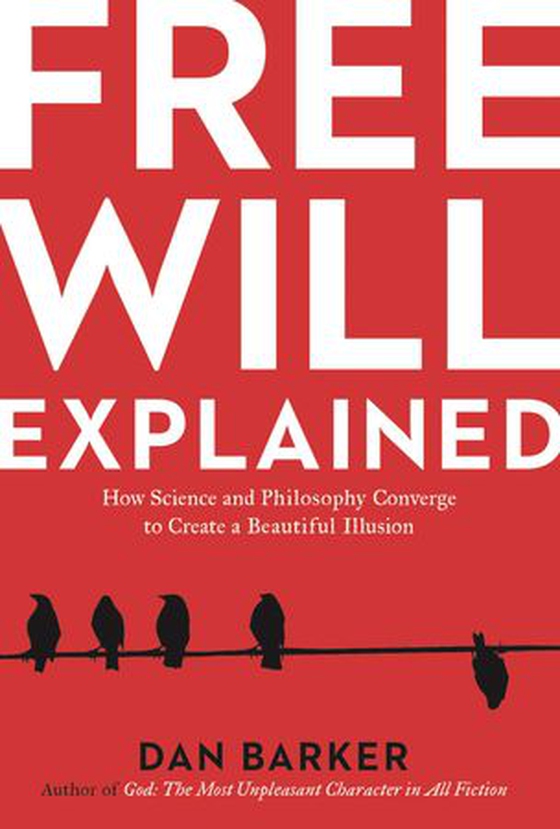
Dan Barker
(forfatter)
Free Will Explained ebok
79,-
A compelling essay on free will from an internationally recognized authority on atheism, and author of God: The Most Unpleasant Character in All Fiction.Do we have free will? And if we don’t, why do we feel as if we do? In a godless universe governed by impersonal laws of cause and effect, are you responsible for your actions? Former evangelical minister Dan Barker (God: The Most Unpleasant Chara…
A compelling essay on free will from an internationally recognized authority on atheism, and author of God: The Most Unpleasant Character in All Fiction.Do we have free will? And if we don’t, why do we feel as if we do? In a godless universe governed by impersonal laws of cause and effect, are you responsible for your actions? Former evangelical minister Dan Barker (God: The Most Unpleasant Character in All Fiction) unveils a novel solution to the question that has baffled scientists and philosophers for millennia. He outlines the concept of what he calls “harmonic free will,” a two-dimensional perspective that pivots the paradox on its axis to show that there is no single answer—both sides are right. Free will is a useful illusion: not a scientific, but a social truth.


Undertittel
How Science and Philosophy Converge to Create a Beautiful Illusion
Forlag
Union Square & Co
Utgitt
13.08.2025
Sjanger
Religion og livssyn, Dokumentar og fakta
Språk
English
Format
epub
DRM-beskyttelse
LCP
ISBN
9781454927365
A compelling essay on free will from an internationally recognized authority on atheism, and author of God: The Most Unpleasant Character in All Fiction.
Do we have free will? And if we don’t, why do we feel as if we do? In a godless universe governed by impersonal laws of cause and effect, are you responsible for your actions? Former evangelical minister Dan Barker (God: The Most Unpleasant Character in All Fiction) unveils a novel solution to the question that has baffled scientists and philosophers for millennia. He outlines the concept of what he calls “harmonic free will,” a two-dimensional perspective that pivots the paradox on its axis to show that there is no single answer—both sides are right. Free will is a useful illusion: not a scientific, but a social truth.
Do we have free will? And if we don’t, why do we feel as if we do? In a godless universe governed by impersonal laws of cause and effect, are you responsible for your actions? Former evangelical minister Dan Barker (God: The Most Unpleasant Character in All Fiction) unveils a novel solution to the question that has baffled scientists and philosophers for millennia. He outlines the concept of what he calls “harmonic free will,” a two-dimensional perspective that pivots the paradox on its axis to show that there is no single answer—both sides are right. Free will is a useful illusion: not a scientific, but a social truth.
Ingen vurderinger ennå
