

Robert Darnton
(forfatter)
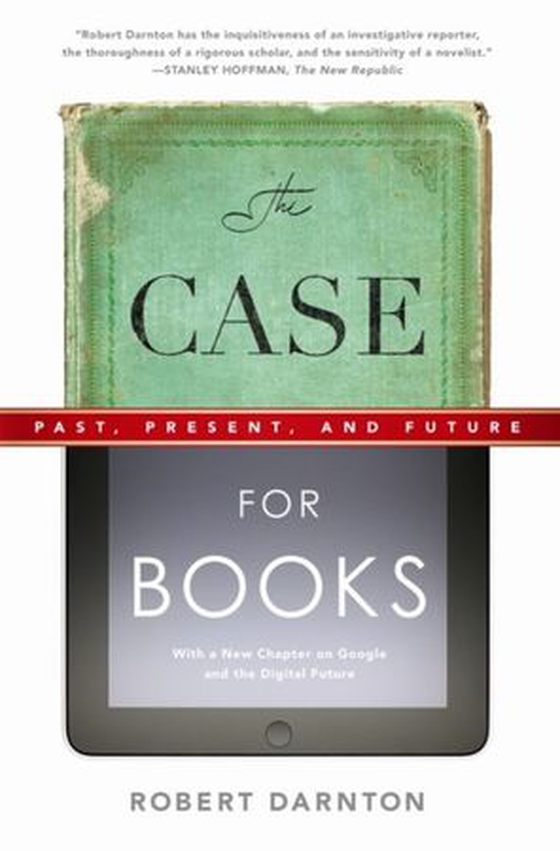
The Case for Books ebok
139,-
The invention of writing was one of the most important technological, cultural, and sociological breakthroughs in human history. With the printed book, information and ideas could disseminate more widely and effectively than ever before -- and in some cases, affect and redirect the sway of history. Today, nearly one million books are published each year. But is the era of the book as we know it -…
The invention of writing was one of the most important technological, cultural, and sociological breakthroughs in human history. With the printed book, information and ideas could disseminate more widely and effectively than ever before -- and in some cases, affect and redirect the sway of history. Today, nearly one million books are published each year. But is the era of the book as we know it -- a codex of bound pages -- coming to an end? And if it is, should we celebrate its demise and the creation of a democratic digital future, or mourn an irreplaceable loss? The digital age is revolutionizing the information landscape. Already, more books have been scanned and digitized than were housed in the great library in Alexandria, making available millions of texts for a curious reader at the click of a button, and electronic book sales are growing exponentially. Will this revolution in the delivery of information and entertainment make for more transparent and far-reaching dissemination or create a monopolistic stranglehold?In The Case for Books, Robert Darnton, an intellectual pioneer in the field of the history of the book and director of Harvard University's Library, offers an in-depth examination of the book from its earliest beginnings to its shifting role today in popular culture, commerce, and the academy. As an author, editorial advisor, and publishing entrepreneur, Darnton is a unique authority on the life and role of the book in society. This book is a wise work of scholarship -- one that requires readers to carefully consider how the digital revolution will broadly affect the marketplace of ideas.



Undertittel
Past, Present, and Future
Forlag
PublicAffairs
Utgitt
01.05.2017
Sjanger
Skjønnlitteratur, Romaner
Språk
English
Format
epub
DRM-beskyttelse
LCP
ISBN
9781586488369
The invention of writing was one of the most important technological, cultural, and sociological breakthroughs in human history. With the printed book, information and ideas could disseminate more widely and effectively than ever before -- and in some cases, affect and redirect the sway of history. Today, nearly one million books are published each year. But is the era of the book as we know it -- a codex of bound pages -- coming to an end? And if it is, should we celebrate its demise and the creation of a democratic digital future, or mourn an irreplaceable loss? The digital age is revolutionizing the information landscape. Already, more books have been scanned and digitized than were housed in the great library in Alexandria, making available millions of texts for a curious reader at the click of a button, and electronic book sales are growing exponentially. Will this revolution in the delivery of information and entertainment make for more transparent and far-reaching dissemination or create a monopolistic stranglehold?
In The Case for Books, Robert Darnton, an intellectual pioneer in the field of the history of the book and director of Harvard University's Library, offers an in-depth examination of the book from its earliest beginnings to its shifting role today in popular culture, commerce, and the academy. As an author, editorial advisor, and publishing entrepreneur, Darnton is a unique authority on the life and role of the book in society. This book is a wise work of scholarship -- one that requires readers to carefully consider how the digital revolution will broadly affect the marketplace of ideas.
In The Case for Books, Robert Darnton, an intellectual pioneer in the field of the history of the book and director of Harvard University's Library, offers an in-depth examination of the book from its earliest beginnings to its shifting role today in popular culture, commerce, and the academy. As an author, editorial advisor, and publishing entrepreneur, Darnton is a unique authority on the life and role of the book in society. This book is a wise work of scholarship -- one that requires readers to carefully consider how the digital revolution will broadly affect the marketplace of ideas.
Ingen vurderinger ennå
