

Richard E. Nisbett
(forfatter)
The Geography of Thought ebok
177,-
When Richard Nisbett showed an animated underwater scene to his American students, they zeroed in on a big fish swimming among smaller fish. Japanese subjects, on the other hand, made observations about the background environment...and the different "seeings" are a clue to profound underlying cognitive differences between Westerners and East Asians. As Professor Nisbett shows in The Geography of …
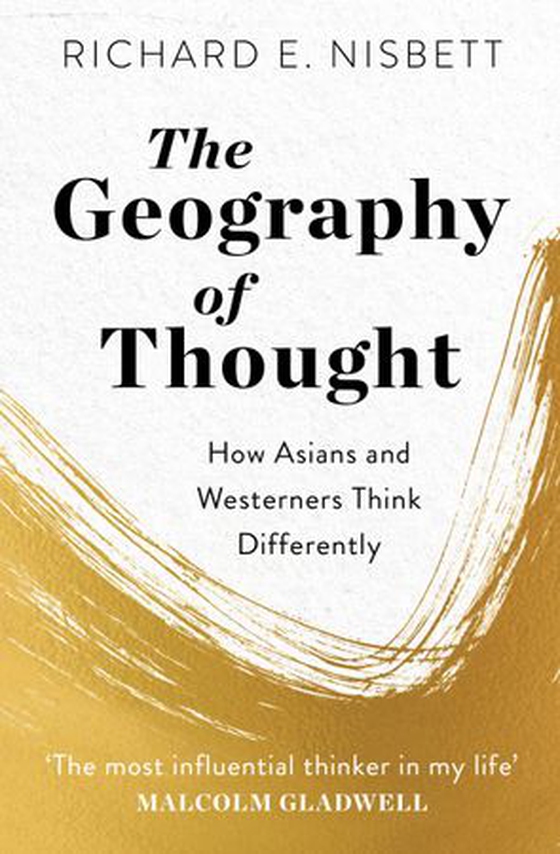
When Richard Nisbett showed an animated underwater scene to his American students, they zeroed in on a big fish swimming among smaller fish. Japanese subjects, on the other hand, made observations about the background environment...and the different "seeings" are a clue to profound underlying cognitive differences between Westerners and East Asians. As Professor Nisbett shows in The Geography of Thought people actually think - and even see - the world differently, because of differing ecologies, social structures, philosophies, and educational systems that date back to ancient Greece and China, and that have survived into the modern world. As a result, East Asian thought is "holistic" - drawn to the perceptual field as a whole, and to relations among objects and events within that field. By comparison to Western modes of reasoning, East Asian thought relies far less on categories, or on formal logic; it is fundamentally dialectic, seeking a "middle way" between opposing thoughts. By contrast, Westerners focus on salient objects or people, use attributes to assign them to categories, and apply rules of formal logic to understand their behaviour.





Undertittel
How Asians and Westerners Think Differently - and Why
Forlag
John Murray Business
Utgitt
11.01.2011
Sjanger
Dokumentar og fakta, Politikk og samfunn
Språk
English
Format
epub
DRM-beskyttelse
LCP
ISBN
9781857884197
When Richard Nisbett showed an animated underwater scene to his American students, they zeroed in on a big fish swimming among smaller fish. Japanese subjects, on the other hand, made observations about the background environment...and the different "seeings" are a clue to profound underlying cognitive differences between Westerners and East Asians. As Professor Nisbett shows in The Geography of Thought people actually think - and even see - the world differently, because of differing ecologies, social structures, philosophies, and educational systems that date back to ancient Greece and China, and that have survived into the modern world. As a result, East Asian thought is "holistic" - drawn to the perceptual field as a whole, and to relations among objects and events within that field. By comparison to Western modes of reasoning, East Asian thought relies far less on categories, or on formal logic; it is fundamentally dialectic, seeking a "middle way" between opposing thoughts. By contrast, Westerners focus on salient objects or people, use attributes to assign them to categories, and apply rules of formal logic to understand their behaviour.
Ingen vurderinger ennå
