

Karsten Albæk
(forfatter)
,
Torben M. Andersen
(forfatter)
,
Rita Asplund
(forfatter)
,
Erling Barth
(forfatter)
,
Bernt Bratsberg
(forfatter)
,
Lars Calmfors
(forfatter)
,
Antti Kauhanen
(forfatter)
,
Jukka Lassila
(forfatter)
,
Mika Maliranta
(forfatter)
,
Niku Määttänen
(forfatter)
,
Oddbjørn Raaum
(forfatter)
,
Knut Røed
(forfatter)
,
Kristine von Simson
(forfatter)
,
Allan Sørensen
(forfatter)
,
Tarmo Valkonen
(forfatter)
,
Pekka Vanhala
(forfatter)
,
Vesa Vihriälä
(forfatter)
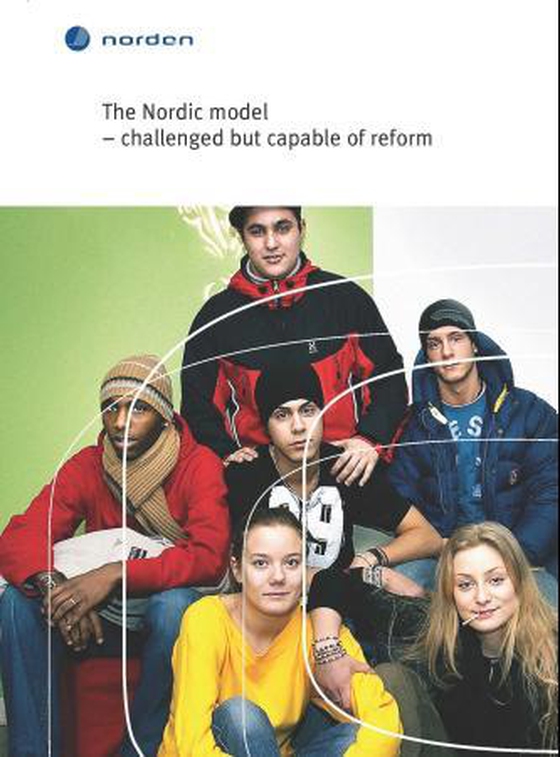
The Nordic model (TemaNord) ebok
105,-
The Nordic welfare model has received a lot of positive attention around the world. High standard of living, small income disparities and substantial social mobility looks like a very attractive package. Moreover, sound public finances and strong emphasis on environmental sustainability suggest that today's success has not been accomplished at the expense of future generations. But is there rea…
The Nordic welfare model has received a lot of positive attention around the world. High standard of living, small income disparities and substantial social mobility looks like a very attractive package. Moreover, sound public finances and strong emphasis on environmental sustainability suggest that today's success has not been accomplished at the expense of future generations. But is there really a unique .Nordic Supermodel", unshaken by the global economic crisis and capable of producing continuous high growth and world class welfare services when many developed economies struggle with the impacts of global competition and population ageing? This book shows that Nordic performance has not been quite as unique or uniform as often claimed. The recent global and European crisis and country specific shocks have affected also the Nordic countries, some of them very strongly. And there are as many variants of the Nordic model as there are Nordic countries. Going forward, also the Nordic countries will be challenged by ageing, globalisation and technological change, some more than the others. On the other hand many fundamentals remain strong in the Nordic countries, and, what is perhaps most important, the Nordics have proved themselves capable of adjusting. Labour market practices, pension policies, and production of public services have been reformed to match new circumstances. Public policies have been aimed at creating new jobs and helping people in transition, not at protecting uncompetitive businesses. There is a strong, rational tradition of consensual policy making. Further reforms are needed, and some widening of income disparities may be inevitable. The message of the book is, however, that refocused and recalibrated in a realistic scale the Nordic model has good chances of thriving well into the future.
Ebok
105,-
Andre har også kjøpt




Undertittel
challenged but capable of reform
Forlag
Nordic council of ministers
Utgitt
02.07.2014
Lengde
243 sider
Sjanger
Serie
TemaNord
Språk
English
Format
epub
DRM-beskyttelse
Ingen
ISBN
9789289327794
The Nordic welfare model has received a lot of positive attention around the world. High standard of living, small income disparities and substantial social mobility looks like a very attractive package. Moreover, sound public finances and strong emphasis on environmental sustainability suggest that today's success has not been accomplished at the expense of future generations. But is there really a unique .Nordic Supermodel", unshaken by the global economic crisis and capable of producing continuous high growth and world class welfare services when many developed economies struggle with the impacts of global competition and population ageing? This book shows that Nordic performance has not been quite as unique or uniform as often claimed. The recent global and European crisis and country specific shocks have affected also the Nordic countries, some of them very strongly. And there are as many variants of the Nordic model as there are Nordic countries. Going forward, also the Nordic countries will be challenged by ageing, globalisation and technological change, some more than the others. On the other hand many fundamentals remain strong in the Nordic countries, and, what is perhaps most important, the Nordics have proved themselves capable of adjusting. Labour market practices, pension policies, and production of public services have been reformed to match new circumstances. Public policies have been aimed at creating new jobs and helping people in transition, not at protecting uncompetitive businesses. There is a strong, rational tradition of consensual policy making. Further reforms are needed, and some widening of income disparities may be inevitable. The message of the book is, however, that refocused and recalibrated in a realistic scale the Nordic model has good chances of thriving well into the future.
Ingen vurderinger ennå
